
Sunday Madness

By Pati Egan
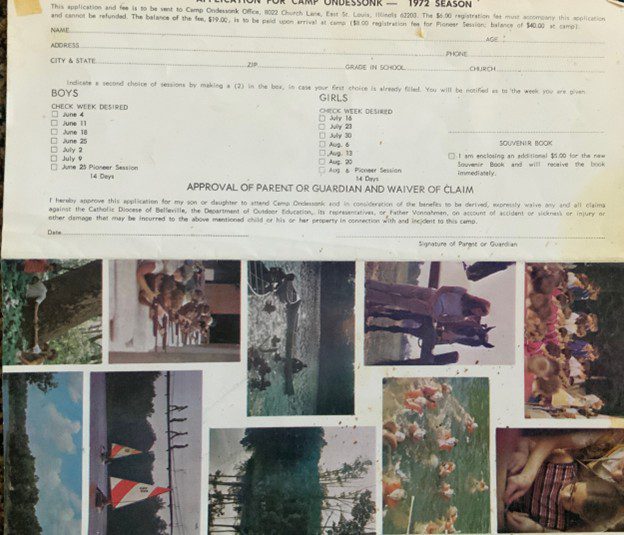
Long lines, hot cars lined up from the Camp inner gate to Ozark, parents arriving at 7:00 am to make sure their child was first in line…this was all a Sunday ritual until 1988. In 1988 Camp started letting campers pick his/her unit ahead of time on the registration form. This was not done in the past because it was felt that the school’s students visited first had a huge advantage if units were picked on the registration form.

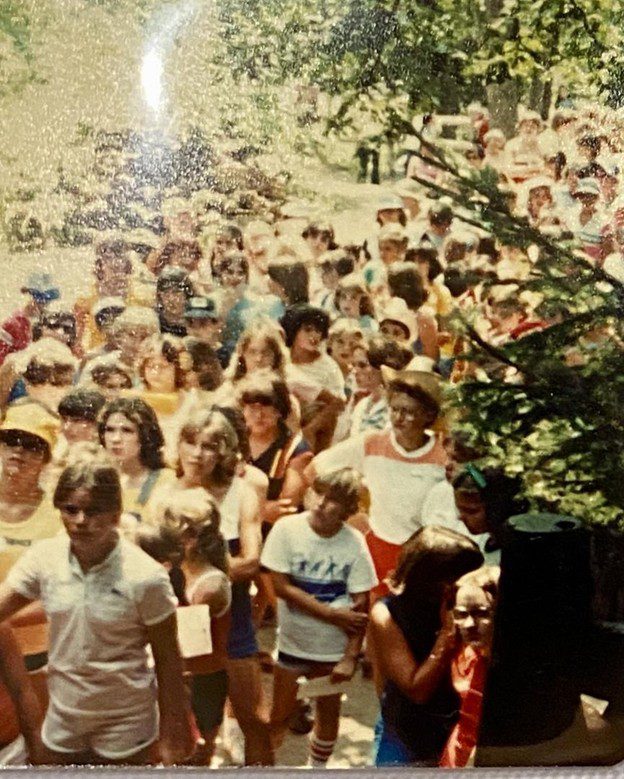
Campers were given a sticker with a number on it that they had to wear. The sticker was given out at the entrance to the parking lot. This sticker indicated when they could register. Almost all of the registration took place in the Administration Building. It started at 11:00 am with a welcome from the director.

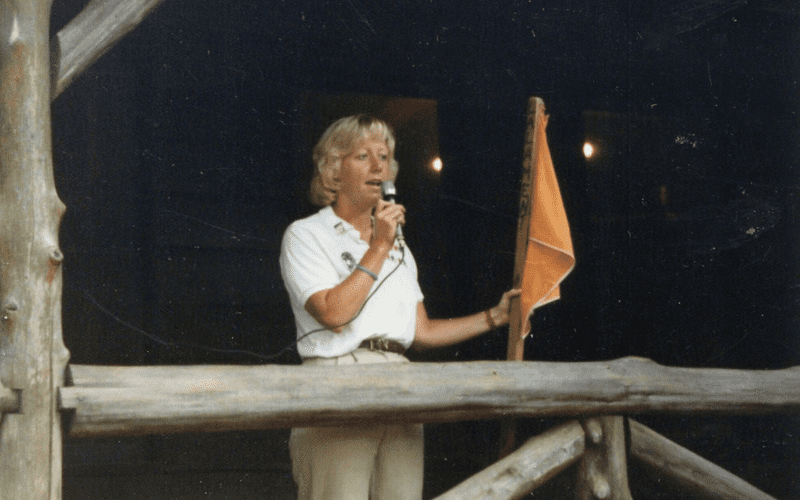
The campers did not pay for anything except the registration deposit ahead of time. For some reason the fee would end in a 9.
So, the hot sweaty campers, clutching their money would slowly advance from outside of the Administration Building to the inside – this is where the real action began.

The inside had many tables where campers paid their fee – no computers back then – just a single-spaced alphabetical order list of all 500 campers. They could also pay for insurance (if they wanted it) and their unit shirt.
Next stop – buy your credit cards at an inside table.
The campers would then pick their unit and head to the Trading Post.
The Unit Leader would be at the unit. Prior to arriving at the unit, the Unit Leader would be scanning the crowd to pick potential “Golden Arrowhead Material.” Two units were reserved for the two-week campers. The majority of these campers would be on the buses from Chicago. The Chicago campers would pick their units on the bus. Each unit would also have four or five spots reserved for the bus campers. They made their selection on the bus.
In the early 1980s a change occurred in unit selection. In the 1970s the older campers would pick the far units; the younger campers were encouraged to pick the close units. At least for Girls Season the rebuilt units were filled with the older campers and the younger campers were filled with the far away units.
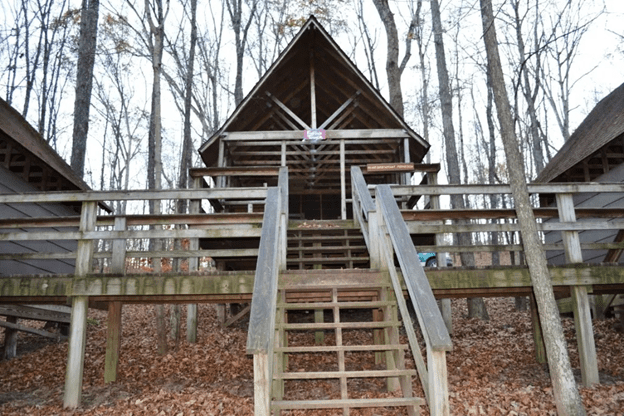
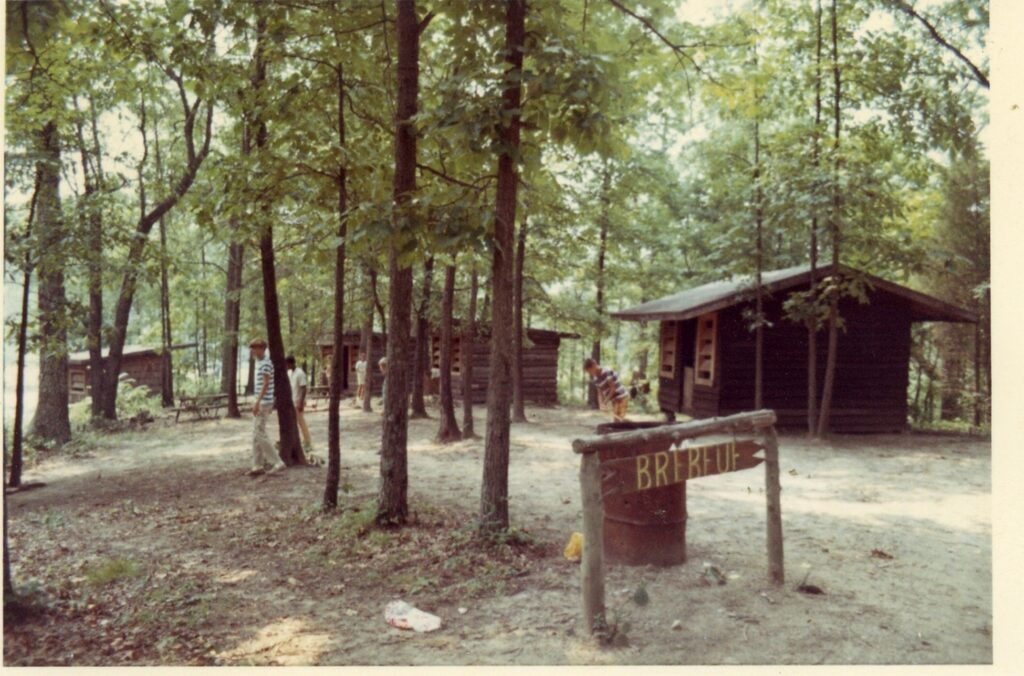
If this all got to be a bit much and your number was 300+, a really good smorgasbord was available in the Original Dining Hall. It featured lots of salads, vegetables, roast beef, ham, fried chicken, fresh fruits and desserts all prepared by the five or six cooks.
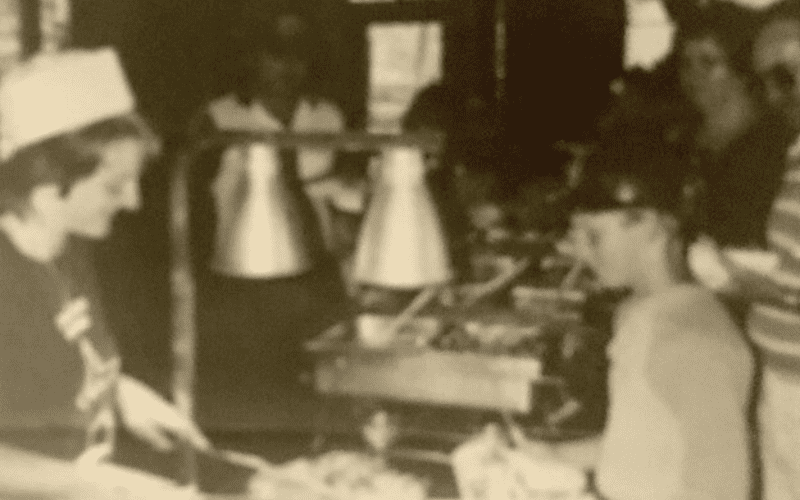
Off to the Trading Post to get your shirt. You may get one that fit or you may not. Camp ordered seconds from companies, and some shirts were very odd. Some were very cool, though. The striped shirts were a big hit!

Next stop – the Health Center – the Infirmary. The camper turned in their health form.

Legend has it that the long uphill walk from the road was to discourage those who weren’t really sick from going to the building. A nurse would collect your health form, look you over and send you on your way. Some campers turned in medications but I don’t recall that it was required.
Now you can head to your unit – if mom or dad drove the camper down, they would help the camper take all of their luggage – no luggage haul in those days! The bus campers had no one to help! Most Chicago campers were coming for two weeks – that was a lot of luggage to carry to Raganeau! The campers who were beginning their second week could earn some “tips” from parents by helping to carry luggage.


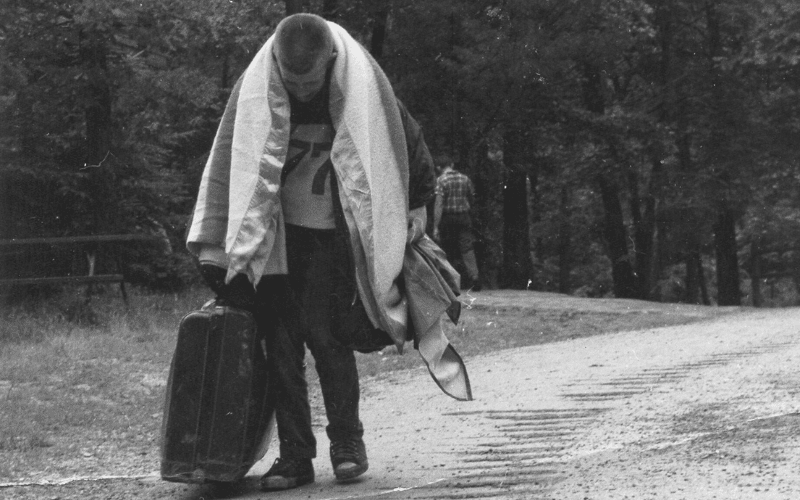
Finally, the campers met their Unit Leader and moved in to a cabin. I don’t recall any staff except the Unit Leader at the unit to greet you – the staff was much smaller then. You picked an open cabin and moved in. They quickly changed into their swim suits and headed for the lake to take their swim test. No time to change! Head next to the stables to get a little horse intro from stable crew.
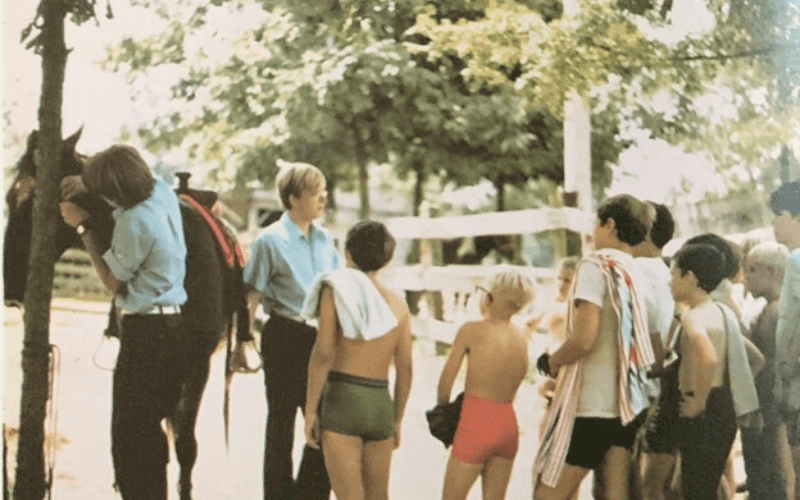
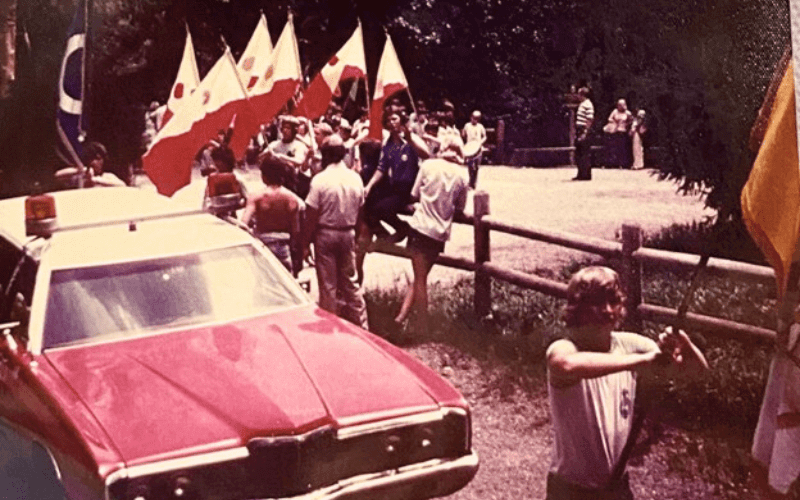
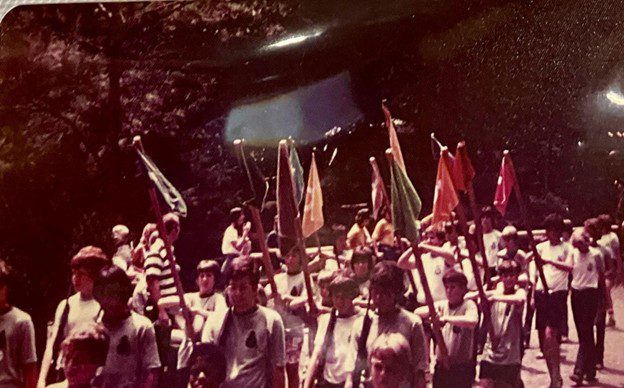
The two-week campers had a parade through the main area. This kept them occupied on Sunday. Two-week campers also earned money being “guides and luggage carriers” for the campers coming in on Sunday.

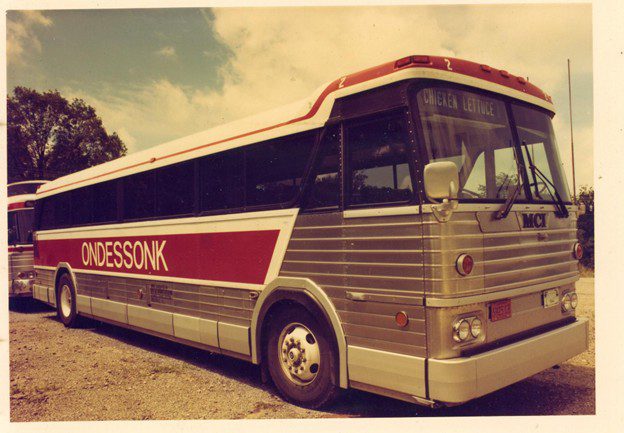
Bus Campers, from Chicago and Springfield, usually arrived around 3:00 pm. The Chicago campers paid their fees on the bus. They also picked a unit. Since many were first-year campers, the bus staff would try to make a good pick for them.

The efficiency of today’s registration process is a great help to the camper and the parent. It has been tweaked throughout the years to be the least stressful event of the summer. I don’t think any money changes hands, perhaps a unit picture is purchased. A stop at the Trading Post for a cool drink is a must on a hot Sunday.
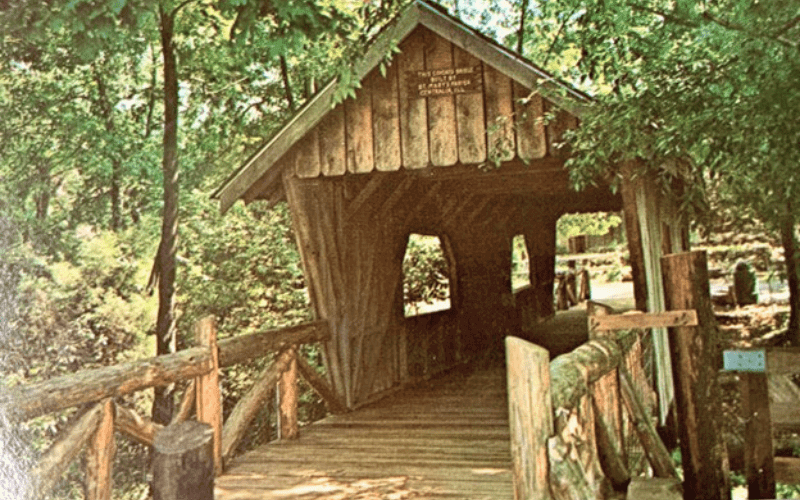
One thing that will never change are the big smiles on Campers’ faces as they cross the Covered Bridge to begin their Ondessonk Adventure.
Click here to learn more about Camp Ondessonk’s History & Mission.