
The Transformative Power of Mini Camp: Why Ages 8-10 Are Critical Years for Overnight Camp Experiences
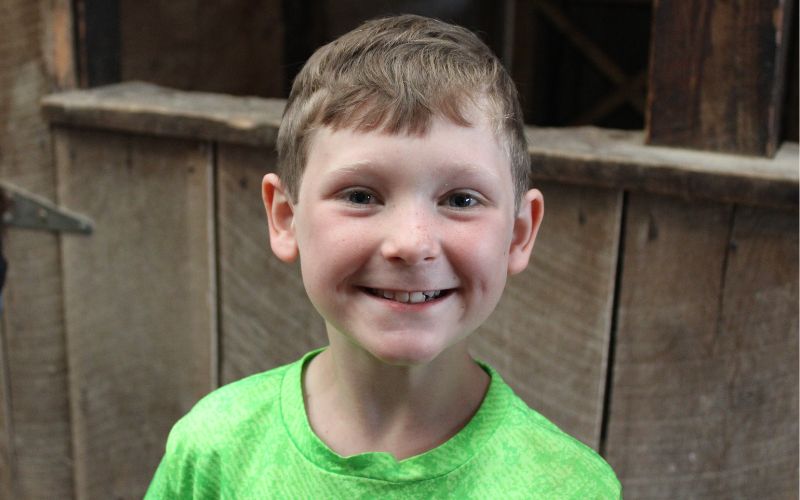
The summer between third and fifth grade represents a pivotal developmental window, one where children are simultaneously seeking independence and still deeply connected to family support systems. For parents considering overnight camp experiences, Mini Camp programs designed specifically for 8–10-year-olds offer an ideal bridge between childhood and adolescence, providing structured opportunities for growth that align perfectly with this age group’s developmental needs.
Understanding the 8–10-Year-Old Mind
Children ages 8-10 experience what psychologists call middle childhood. This period is marked by rapid cognitive, social, and emotional growth. The American Camp Association says children at this stage develop more abstract thinking, focus more on peers, and gain self-efficacy. Mini camps, lasting 3 days, introduce overnight camping in an appropriate age way. They respect these realities and gently stretch comfort zones.
Erik Erikson labeled this stage “industry versus inferiority.” Here, children build competence and self-belief by mastering new skills. Camp Ondessonk’s Mini Camp backs this important phase. It offers challenges in a supportive setting, so children gain confidence through success, not unhealthy comparison.
The Neurological Argument for Camp at This Age
Recent neuroscience research reveals that the prefrontal cortex, responsible for decision-making, impulse control, and social behavior, undergoes significant development during middle childhood. A study published in the Journal of Experimental Child Psychology demonstrates that children ages 8-10 show marked improvements in executive function skills, including planning, organizing, and self-monitoring. Mini Camp experiences provide real-world contexts for practicing these emerging skills in a scaffolded environment where trained counselors support rather than replace adult guidance.
The shorter duration of Mini-Camps is neurologically appropriate for this age group. Research from the University of Minnesota’s Center for Early Education and Development suggests that 8-10-year-olds benefit most from experiences that challenge them without overwhelming their still-developing stress regulation systems. A 3-day experience allows children to navigate homesickness, practice independence, and build resilience without the extended separation that might prove counterproductive for first-time campers in this age range.
Social-Emotional Development Through Peer Interaction
The American Camp Association’s research includes surveys of over 16,000 campers. Their findings show that Camp greatly boosts social skills, self-esteem, and independence. For 8-10-year-olds, the biggest gains are in making friends and exploring new experiences, both of which are key for their stage.
During middle childhood, peer relationships became crucial for identity. School friendships often form from proximity and convenience. In contrast, camp friendships grow through shared challenges and real connections. Mini camps create “temporary communities”, social spaces where children try out new sides of themselves. Here, they are free of their school’s social history.
Dr. Christopher Thurber’s research at Phillips Exeter Academy finds that short, positive separations from parents during middle childhood build secure attachments and healthy autonomy. His long-term studies show that 8-10-year-olds who attend short-term camps adjust better to separations as they grow into teens. This suggests Mini-Camps are key developmental steps.
Skill Mastery and Competence Building
Camp Ondessonk’s Mini Camp curriculum aligns with what educational psychologist Benjamin Bloom called “mastery learning”, the idea that children learn best when they can fully grasp concepts before moving forward. The concentrated timeframe of mini camps allows 8-10-year-olds to develop genuine competence in specific activities, whether Canoeing, Archery, or Campfire Building. This sense of mastery is psychologically distinct from mere participation; research from Stanford University’s Carol Dweck on growth mindset demonstrates that children who experience true skill progression develop more resilient attitudes toward challenge.
The multi-activity structure typical of camp programs aligns with Howard Gardner’s theory of multiple intelligences, which emphasizes diverse pathways to competence. A child struggling academically may discover leadership abilities on the climbing wall, while an athletic child might find joy in creative arts. This range of opportunities is especially important for 8-10-year-olds, who are developing their self-concept and need various domains to experience success.
Nature Immersion and Cognitive Development
Environmental psychology shows that nature exposure helps cognitive growth, stress control, and has lasting effects for years. A University of Illinois study found that children with easy access to nature had better attention, impulse control, and delayed gratification. Camp Ondessonk’s Southern Illinois site offers immersive nature experiences that are now rare for many children.
Richard Louv’s “Last Child in the Woods” synthesized decades of research demonstrating what he termed “nature deficit disorder”—a host of behavioral and developmental challenges linked to decreased outdoor time. For 8-10-year-olds growing up in an increasingly digital world, mini camp programs offer what psychologists call a “pattern interrupt”—a break from habitual environments that creates space for new neural pathways and behavioral patterns to form.
Risk Assessment and Resilience Building
Controlled risks at Camp, like sleeping away from home or trying new foods, build what researchers call “psychological resilience.” A study from the University of Pennsylvania showed that children who handled manageable challenges in middle childhood coped better with stress as teens and adults.
Mini Camps provide what developmental psychologists term “proximal development opportunities,” challenges slightly beyond a child’s current comfort zone but within their capacity, with appropriate support. This concept, articulated initially by Lev Vygotsky, suggests that optimal learning occurs in this zone of stretch. For 8-10-year-olds, a 3-day camp experience represents an ideal level of challenge: significant enough to require adaptation and growth, brief enough to feel achievable.
The Camp Ondessonk Advantage
Camp Ondessonk’s 60-year history serving youth provides institutional knowledge about appropriate age programming that newer facilities cannot be replicated. The Camp’s accreditation by the American Camp Association ensures adherence to nearly 300 research-based standards covering health, safety, and programming. For parents of 8-10-year-olds, this accreditation provides assurance that Mini Camp experiences are designed with developmental appropriateness as a core consideration.
The Camp’s staff training matches best practices from ACA’s Camp Research Forums. These forums focus on being responsive to development, emotional intelligence, and positive youth development. Counselors for 8-10-year-olds learn about homesickness prevention, setting age-appropriate boundaries, and helping peers connect.
Practical Considerations for Parents
Research on parent-child attachment suggests that the quality of preparation predicts adjustment success more than child temperament. Studies from the University of California, Los Angeles, indicate that children whose parents frame overnight experiences positively and provide concrete preparation show significantly better adjustment than children whose parents focus on potential problems or transmit their own anxieties.
The American Camp Association recommends that parents of first-time campers ages 8-10:
- Visit the camp facility before summer if possible.
- Practice small overnight separations (sleepovers with relatives) before camp.
- Focus conversations on excitement and capability rather than concerns.
- Avoid making pickup contingent on the child’s comfort level, which can undermine commitment.
- Prepare for normal homesickness as part of the growth process rather than a problem to be solved.
Long-Term Outcomes: What the Research Shows
Perhaps most compellingly, longitudinal research demonstrates lasting benefits from camp experiences during middle childhood. The ACA’s 20-year Youth Outcomes Study found that adults who attended camp during ages 8-12 reported higher levels of environmental awareness, social skills, and civic engagement compared to non-campers, even when controlling for socioeconomic factors. They also showed greater comfort with outdoor recreation and more frequent engagement with nature-based activities.
A Harvard Medical School study on resilience factors in adolescence identified childhood camp experiences as a significant protective factor against anxiety and depression. Researchers theorized that the combination of nature exposure, physical activity, peer connection, and skill mastery created a psychological foundation that buffered against later stressors.
Conclusion: The Right Time, The Right Place
The decision to send an 8-10-year-old to Mini Camp represents an investment in developmental capacities that will serve them throughout adolescence and into adulthood. Camp Ondessonk’s Mini Camp programs are specifically designed to meet children where they are developmentally, emotionally, and socially, while creating opportunities for growth that simply cannot be replicated in day-to-day life.
As our understanding of child development deepens through ongoing research, the evidence increasingly points to middle childhood as a critical window for experiences that build independence, resilience, and self-efficacy. Mini Camp programs offer a developmentally appropriate, research-supported pathway for children to develop these capacities in an environment designed specifically for their success.
For families considering whether their 8-10-year-old is “ready” for camp, the research suggests a different question might be more appropriate: Is this the opportunity your child needs to discover what they’re ready for?
Learn more about Camp Ondessonk’s Mini Camp programs.
References:
American Camp Association. (2006-2024). Youth Outcomes Battery: Multi-year research findings. American Camp Association.
American Camp Association. Standards for Camp Accreditation.
Dweck, C. S. (2006). Mindset: The new psychology of success. Random House.
Erikson, E. H. (1950). Childhood and society. Norton.
Gardner, H. (1983). Frames of mind: The theory of multiple intelligences. Basic Books.
Kuo, F. E., & Taylor, A. F. (2004). A potential natural treatment for attention-deficit/hyperactivity disorder: Evidence from a national study. American Journal of Public Health, 94(9), 1580-1586.
Louv, R. (2005). Last child in the woods: Saving our children from nature-deficit disorder. Algonquin Books.
Masten, A. S., & Reed, M. G. J. (2002). Resilience in development. In C. R. Snyder & S. J. Lopez (Eds.), Handbook of positive psychology (pp. 74-88). Oxford University Press.
Thurber, C. A., & Walton, E. A. (2012). Homesickness and adjustment in university students. Journal of American College Health, 60(5), 415-419.
Vygotsky, L. S. (1978). Mind in society: The development of higher psychological processes. Harvard University Press.