
Faith, Character, and Service: What Camp Ondessonk Taught My Daughter (And Me)
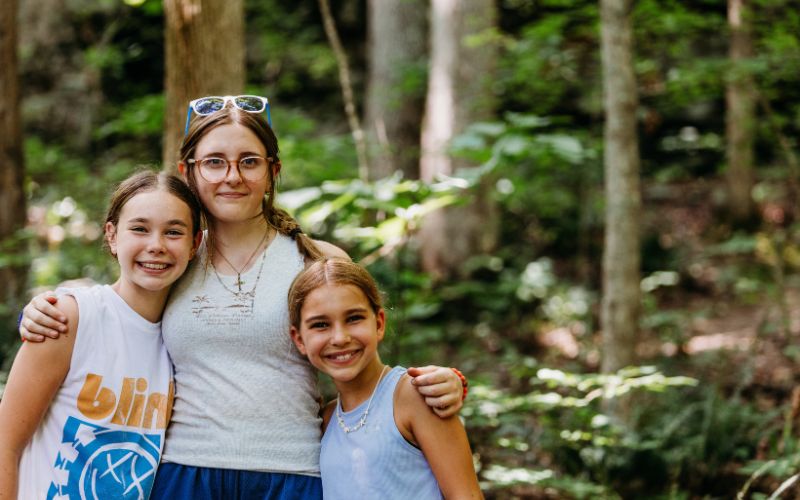
I’m not ashamed to admit it: I cried on the drive home from Camp Ondessonk the first time I dropped off my daughter. Not in front of her, of course. I held it together through the check-in, the tour of her cabin, and the awkward dad hug she tolerated before running off to meet her counselor. But somewhere on Highway 64, with the Shawnee National Forest disappearing in my rearview mirror, it hit me: my little girl was growing up, and I had to trust others to help guide her.
That was four years ago. Looking back now, sending her to Ondessonk ranks among the best decisions my wife and I ever made as parents. What happened there went far beyond arts and crafts or learning to paddle a canoe. My daughter discovered something at that Camp, something about faith, about character, about who she wanted to be in this world. And honestly? It made me want to be a better man, too.
The Decision We Almost Didn’t Make
I’ll be honest: I was skeptical at first. Summer Camp felt like something from another era, something my parents’ generation did. Why spend the money when she could just hang out with friends, maybe do a local sports clinic? And two weeks away seemed like a long time.
But my wife had attended a Catholic camp growing up, and she was insistent. “This is different,” she kept saying. “It’s not just about keeping kids busy. It’s about who they become.”
She was right, though I wouldn’t fully understand why until I saw the change in our daughter. Research actually supports this: studies show that young people who participate in structured programs emphasizing character development exhibit stronger moral reasoning, increased empathy, and better decision-making skills throughout their lives (Berkowitz & Bier, 2005). The American Camp Association documents that quality camp programs serve as powerful venues for youth development, particularly in fostering social competence, independence, and values formation (American Camp Association, 2024).
But as a dad, I didn’t need researchers to tell me my daughter had changed. I could see it in her eyes the moment I picked her up.
Faith Wasn’t Just Sunday Morning Anymore
We’ve always taken our faith seriously in our family. Sunday Mass, prayer before meals: we were doing everything “right.” But I’d noticed my daughter going through the motions lately, her mind elsewhere during prayers, her questions about faith becoming less frequent.
The drive home from Camp that first summer, she couldn’t stop talking about the Council in the forest. “Dad, it was different,” she explained. “We could talk about real stuff: things we were worried about, things we were grateful for. And our counselor shared too. She told us about when her dad got sick and how she prayed through it.”
I glanced at her in the rearview mirror. “What did you talk about?”
She hesitated, then said quietly, “I talked about being scared of not being good enough. And everyone understood. They didn’t judge me or try to fix it. We just prayed together.”
My throat tightened. When did my daughter feel scared and not tell me? Had I created an environment where she felt she needed to be perfect?
Research on adolescent faith development indicates that experiential learning in supportive community settings significantly strengthens spiritual identity and moral foundations (King & Roeser, 2009). What I witnessed was my daughter’s faith moving from her head to her heart, from something we told her to believe to something she was choosing to embrace.
That night, she asked if we could pray together as a family, really pray, not just recite the same meal blessing we’d said for years. We’ve done it every night since.
She Found Her Backbone
The second summer, my daughter came home with a story that still makes me proud. Apparently, there was a girl in her cabin who was being excluded by some of the other campers. My daughter told me the girl was quiet, didn’t wear the “right” clothes, and struggled with some of the physical activities.
“What did you do?” I asked, pretty sure I knew my kid’s heart.
“I sat with her at lunch. Asked her to be my partner during swimming. And I told the other girls that what they were doing wasn’t cool.”
“And?”
“Some of them got mad at me. But Dad, you should have seen her face when I asked her to partner up. It was worth it.”
I reached over and squeezed her shoulder. “I’m proud of you, sweetheart. That took guts.”
“My counselor told me something,” she continued. “She said that doing the right thing usually isn’t easy, but that’s what makes it right. Character is who you are when nobody’s watching, but also who you are when everyone’s watching and judging you.”
The American Camp Association identifies specific outcomes that structured camp experiences cultivate: responsibility, teamwork, resilience, and leadership (American Camp Association, 2024). But what struck me was that this wasn’t just leadership in the “popular kid” sense. This was moral courage. Studies of camp-based character education reveal that peer relationships and trusted adult mentorship create optimal conditions for the development of prosocial behaviors and ethical decision-making capacities (Duerden et al., 2014).
My daughter had found her voice, her conviction. As a father, you want your daughter to be kind, but you also need her to be strong, to stand up for what’s right even when it costs her something. Ondessonk gave her the space to practice that strength.
Service Became Personal, Not Performative
After her first summer, she came home and immediately started going through her closet. “Dad, can you help me take these to St. Vincent de Paul?” Mountains of clothes that didn’t fit or weren’t worn anymore. Then she asked if she could volunteer at the local food pantry.
Research demonstrates that youth who engage in meaningful service activities develop increased civic responsibility, enhanced empathy, and stronger connections to their communities (Celio et al., 2011). When service is connected to faith and character principles, these benefits deepen.
But here’s what really got me: she wasn’t doing it for resume padding or community service hours. She genuinely wanted to help. And watching her pack food boxes at the pantry, chat easily with families picking up groceries, and treat everyone with dignity, I realized she was teaching me what faith actually looks like in action.
The Tough Conversations Got Easier
One of the unexpected benefits of Camp Ondessonk has been how it’s opened up communication in our family. There’s something about spending two weeks in a faith-centered community that gives kids language to talk about values, struggles, and what matters.
Last year, my daughter came to me troubled about a situation at school: kids vaping in the bathroom, pressuring others to try it. In the past, she might have kept that to herself, worried about being a snitch or afraid I’d overreact.
Instead, she said, “Dad, I need to talk through something. At Camp, when we had problems, we’d bring them to our counselor and talk them through. Can we do that?”
We sat on the back porch for an hour, talking about peer pressure, about making choices aligned with your values even when they’re unpopular, about the difference between being judgmental and having standards for yourself. I didn’t have to lecture. She was already thinking it through, using the frameworks she’d developed at Camp.
“My counselor told us that your reputation is what others think of you, but your character is who you actually are,” she said. “I don’t want to be known as the girl who goes along with stuff I know is wrong.”
As a father of a teenage daughter, having those lines of communication open is worth more than gold. The Camp environment created that foundation.
She’s Teaching Me About Faith
Here’s something I didn’t expect: my daughter’s camp experiences have deepened my own faith. Watching her live out what she’s learned with such authenticity and joy has challenged me to examine my own walk with God.
Are my actions aligned with what I claim to believe? Am I serving others, or am I just talking about service? Do I show the same courage in standing up for what’s right that I expect from her?
Last Sunday, during Mass, my daughter elbowed me during the homily. The priest was talking about loving your enemies, turning the other cheek: the hard teachings. She leaned over and whispered, “That’s what we talked about at Camp. It’s not about being a doormat. It’s about being so secure in who you are that you don’t need revenge.”
A fourteen-year-old teaching her father theology. That’s what Ondessonk did.
The ROI No Spreadsheet Can Capture
I’m a practical guy. I think about return on investment and cost-benefit analysis. When we wrote that first check for Camp, I wondered if it was worth it. Could we justify the expense?
Four years later, I know the answer: you can’t put a price on character formation. You can’t quantify what it means to raise a daughter who knows who she is, what she believes, and how she’s called to serve.
Longitudinal studies of camp participants show sustained improvements in self-esteem, social skills, and values-based decision making that persist well after camp concludes (Thurber et al., 2007). I’ve watched those improvements unfold in real time. My daughter approaches challenges with resilience. She chooses friends based on character rather than popularity. She thinks about her future not just in terms of career success but in terms of making a meaningful contribution.
Those lessons are priceless. And they’ll serve her far better than any SAT prep course or resume builder ever could.
For Dads on the Fence
If you’re reading this and wondering whether Camp Ondessonk is right for your family, let me offer some father-to-father advice: your hesitation is normal. Sending your daughter away feels vulnerable. Trusting others with her development takes faith.
But here’s what I’ve learned: you’re not giving up your role as her father. You’re surrounding her with a community that reinforces what you’re teaching at home. You’re giving her space to discover her own faith, test her own character, practice serving others, all in an environment designed to support that growth.
When you send your child to Camp Ondessonk, you’re not simply giving them a summer adventure. You’re investing in their formation as people of faith, character, and service: individuals who will leave the world better than they found it.
That nervous dad who cried on Highway 127 four years ago? He’d do it all over again without hesitation. Because what my daughter learned at Camp Ondessonk shaped not just her future, but our entire family’s understanding of what it means to live out our faith.
And for that gift, I’m eternally grateful. Click here to learn more about Camp Ondessonk’s Summer Camp Programs
References
American Camp Association. (2024). Youth outcomes at camp. American Camp Association Research.
Berkowitz, M. W., & Bier, M. C. (2005). What works in character education: A research-driven guide for educators. Character Education Partnership.
Celio, C. I., Durlak, J., & Dymnicki, A. (2011). A meta-analysis of the impact of service-learning on students. Journal of Experiential Education, 34(2), 164-181.
Duerden, M. D., Widmer, M. A., Taniguchi, S. T., & McCoy, J. K. (2014). Adventures in identity development: The impact of adventure recreation on adolescent identity development. Identity: An International Journal of Theory and Research, 9(4), 341-359.
King, P. E., & Roeser, R. W. (2009). Religion and spirituality in adolescent development. In R. M. Lerner & L. Steinberg (Eds.), Handbook of adolescent psychology (3rd ed., pp. 435-478). John Wiley & Sons.
Thurber, C. A., Scanlin, M. M., Scheuler, L., & Henderson, K. A. (2007). Youth development outcomes of the camp experience: Evidence for multidimensional growth. Journal of Youth and Adolescence, 36(3), 241-254.