
Evolution of a Youth Camp – Unit by Unit

By Judy (Blase) Woodruff
February 26, 1959: a letter from Most Rev. Albert R. Zuroweste, Bishop of the Diocese of Belleville, stated his preference of names for the new Catholic Youth Camp in southern Illinois. It would be named Ondessonk, the Native American name for St. Isaac Jogues, one of the North American martyrs. In order for the Camp to open June 28, 1959, a call went out to parishes around the Diocese to assist in constructing the Camp. Each deanery was responsible for a significant building project.
Volunteers began in late spring of 1959 to commence building the framework of Ondessonk. The first major building was the Original Dining Hall and was erected by volunteers from the parishes of the South Deanery.
There wasn’t much time to create the rest of Camp to ensure a June 28, 1959, opening!
Father Leo Hayes, program director during the first summer said, “When we got there that first week, none of the units were complete.” Volunteers scrambled to complete the first four units that would house the campers. In keeping with naming units after the Jesuit companions of Isaac Jogues, the North American martyrs, the first four units were named Brébeuf, Chabanel, Goupil, and LaLande after Fathers Jean de Brébeuf, Noel Chabanel, Réné Goupil, and Jean de LaLande.
That first year, 481 campers were served during four weeks of Summer Camp. The units originally held 30 campers each, and later on, units typically housed 36 campers.
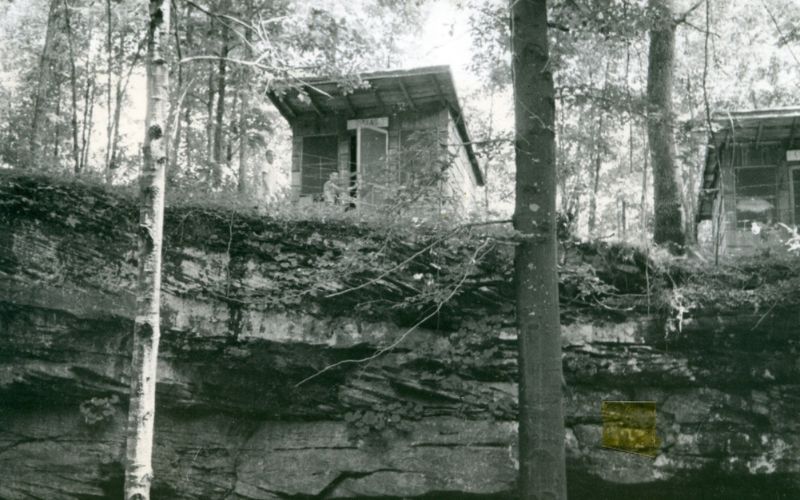
It soon became apparent that the response to Camp Ondessonk after that first summer was quite enthusiastic. The number of units did not increase, but the number of weeks Camp was offered did.
It was obvious that more units were needed to accommodate the ever-increasing number of campers. During the summer of 1960, Daniel and Garnier were added, and by 1964, seven units were available to campers after the addition of Lalemant that was comprised of Army tents near the creek bed at the bottom of the canyon. These units were named for Jesuits and martyrs Anthony Daniel, Charles Garnier, and Gabriel Lalemant. Once Lake Echon was in use, the units of Lalemant and Garnier were moved from the canyon to the shoreline on the east side of the lake.
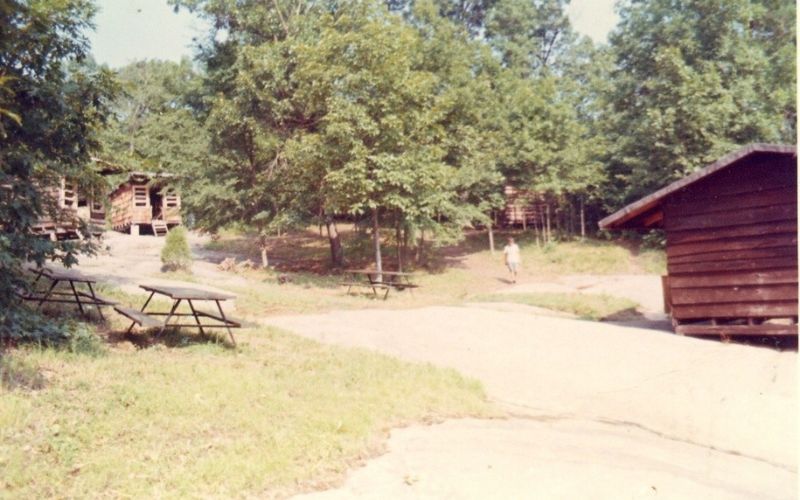
The summer of 1965 saw 4,380 campers and the addition of the unit of Tekakwitha, the only unit comprised of three lodges. Kateri Tekakwitha was known as the Lily of the Mohawks. She was a Mohawk/Algonquin who converted to Catholicism and became known for her devotion to Jesus Christ. She was canonized in 2012, the first Native American saint.
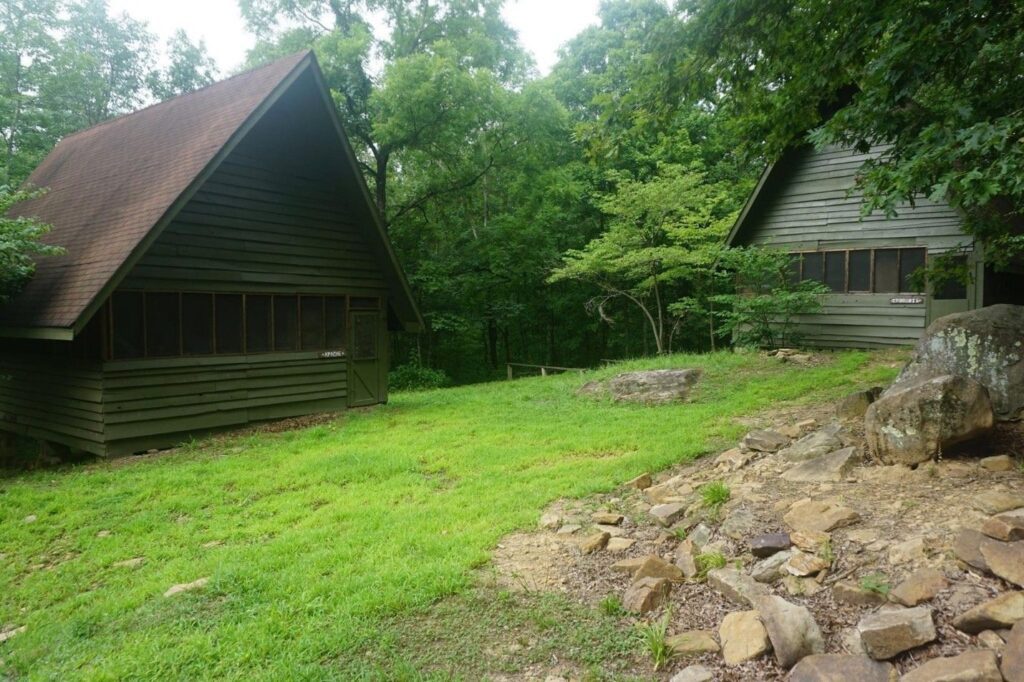
The unit of Ahatsistari was a tent unit in 1965. After Lake Echon flooded the valley in 1967, it was moved and consisted of cabins on the east side of the lake. Eustache Ahatsistari was a Huron warrior. He was one of the most notable success stories of Catholic conversions of Native Americans. His conversion to Christianity inspired many of his tribesmen to also convert. He was captured alongside St. Isaac Jogues and executed.
In 1967, the unit of Amantacha was built as the first tree house unit. Amantacha, baptized as Louis de Sainte-Foi, was a Huron native educated in France who became a friend and aide to the Jesuit missionaries in the Huron and Iroquois countries.
The primitive units of Teondechoren and Couture were added in 1969. Teon, located at Pine Lake was modeled after Conestoga wagons and later primitive tree houses. The tree houses were no longer used after the summer of 1971 and the unit was dismantled. Joseph Teondechoren was baptized September 8, 1640. After his conversion, he became highly regarded by the chiefs and captains of his tribe of the Ossosane.
The unit of Couture moved several times, but was based in lower Pakentuck, offering tent camping. Guillaume Couture was a French lay missionary of the Jesuits in New France, as well as a diplomat and translator.
In 1970, a new program brought as many as 2,000 more campers each summer through the Frontier Units. In order to accommodate these campers when they were at Camp, a Frontier dorm was built at the north end of the parking lot in 1972.
A new tree house unit was built in 1972, Raganeau. Paul Ragueneau was a Jesuit missionary in New France. After arriving in Quebec, he was sent to the Huron mission where he worked under the instruction of Fathers Jean de Brébeuf and Gabriel Lalemant.
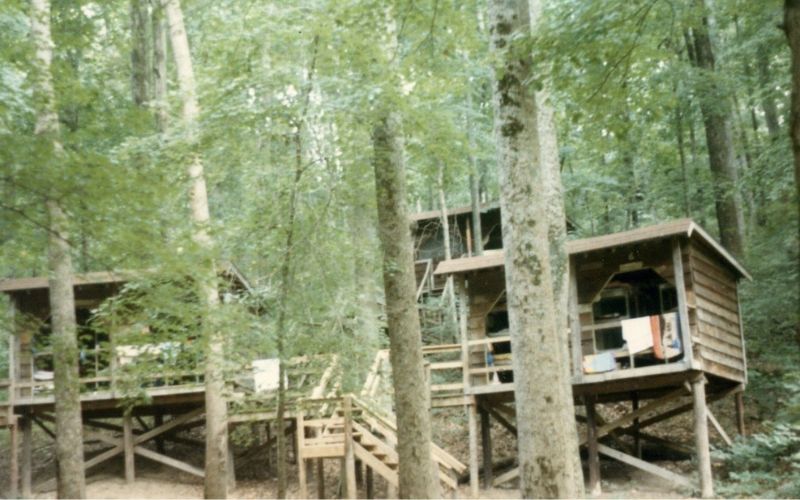
When camper overbooking happened in 1973, the unit of Teondechoren was resurrected as cabins and was built by staff near Ragueneau over a summer weekend!
By summer of 1975, 7,321 campers were served, which included the 2,000 Frontier Unit campers.
Most of the units were rebuilt throughout the late 1970s to the mid-1980s, and they reflected the Polynesian-inspired, three-sided, tree house cabins you see today. During that same time, renovations took place to the Counselor-in-Training building – now the BOQ.
As all 12 units were filled, Couture was reinstated as a tent unit during Girls’ Season in the mid-1980s. It was located off the parking lot in the former Frontier tent area and became the last tent unit at Camp. But the cabin units of Teondechoren, along with Ahatsistari, were dismantled in 1989 since 12 units were no longer needed.
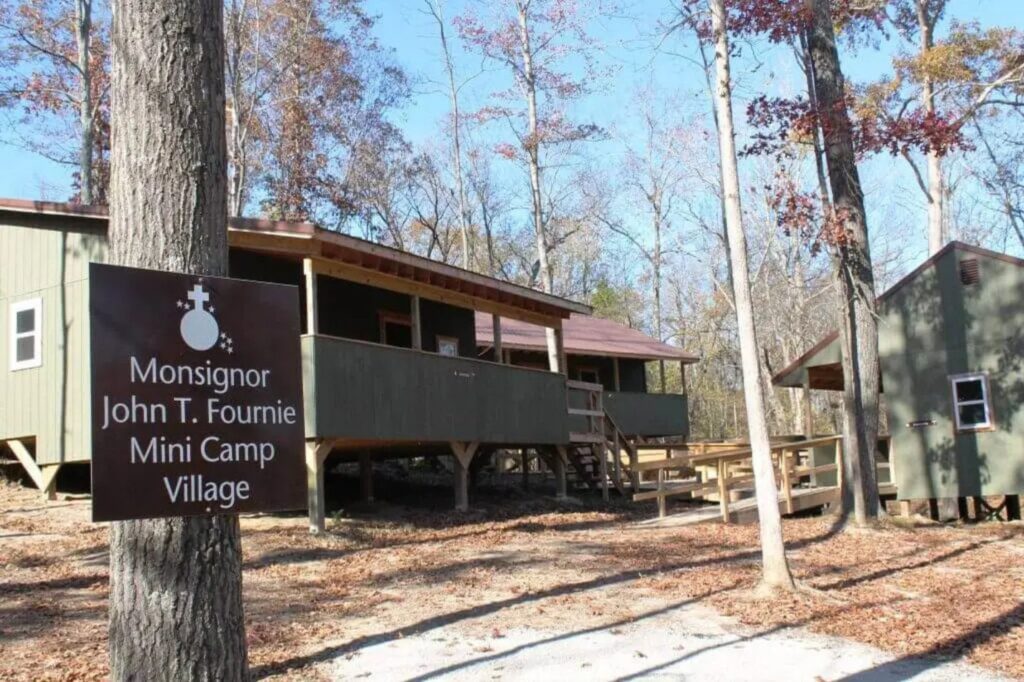
More than 30 years elapsed before two more units were added as a result of a new program at Camp Ondessonk. In addition to the traditional campers ages 10- to 15-years-old, in 2015, Mini Camp was now offered to 8- to 10-year-olds. The Monsignor John T. Fournie Mini Camp Village holds the units of Chiwatenhwa (boys’ unit) and Aonnetta (girls’ unit). Chiwatenhwa was a Huron, and in 1639, became the first lay administrator of the Catholic Church in Canada. He was baptized August 16, 1637, by Father Jean de Brébeuf and named Joseph. His wife, Aonette, was baptized March 19, 1638 and named Marie. Chiwatenhwa and Aonnetta were the first Native Americans to celebrate a Catholic marriage in Huronia.
No matter the year, no matter the unit, Camp Ondessonk has evolved throughout its 67 years of existence. New units, new locations, and new structures have kept camper involvement fresh, but above all, the experience for campers has continued to be one of excitement, learning, and joy in God’s creation.
Click here to view more photos of Camp Ondessonk’s facilities & event spaces.