
Fire as a Forest Healer: The Prescribed Burn of Durbin’s Glade
By Camp Ondessonk Communication Team
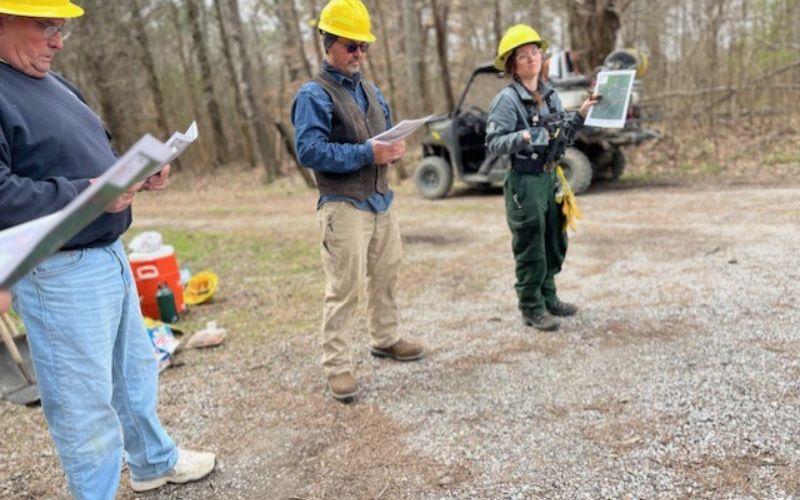
There is a particular kind of silence that follows a prescribed burn. The smoke clears. The blackened earth settles. And then, almost imperceptibly, life begins pushing back through the ash. On Friday, March 13, 2026, that silence came to a stretch of Southern Illinois landscape near Pakentuck Road, just west of Kane Lake. Fire had returned, not as a threat, but as prescription.
Carefully Orchestrated
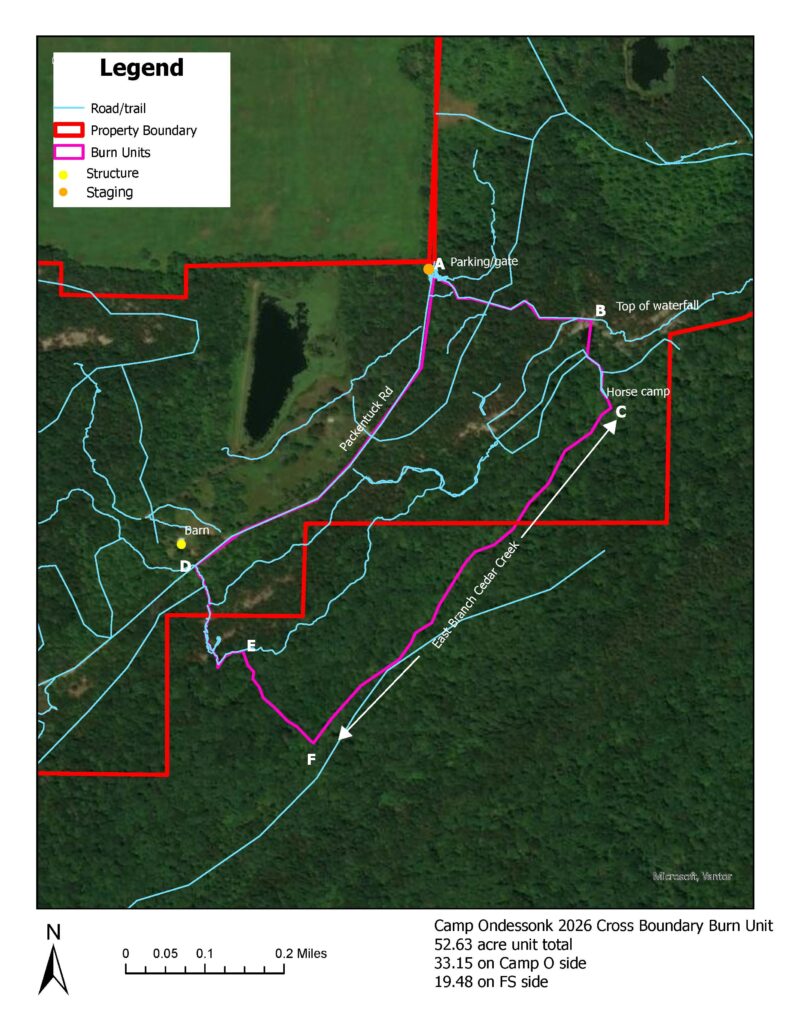
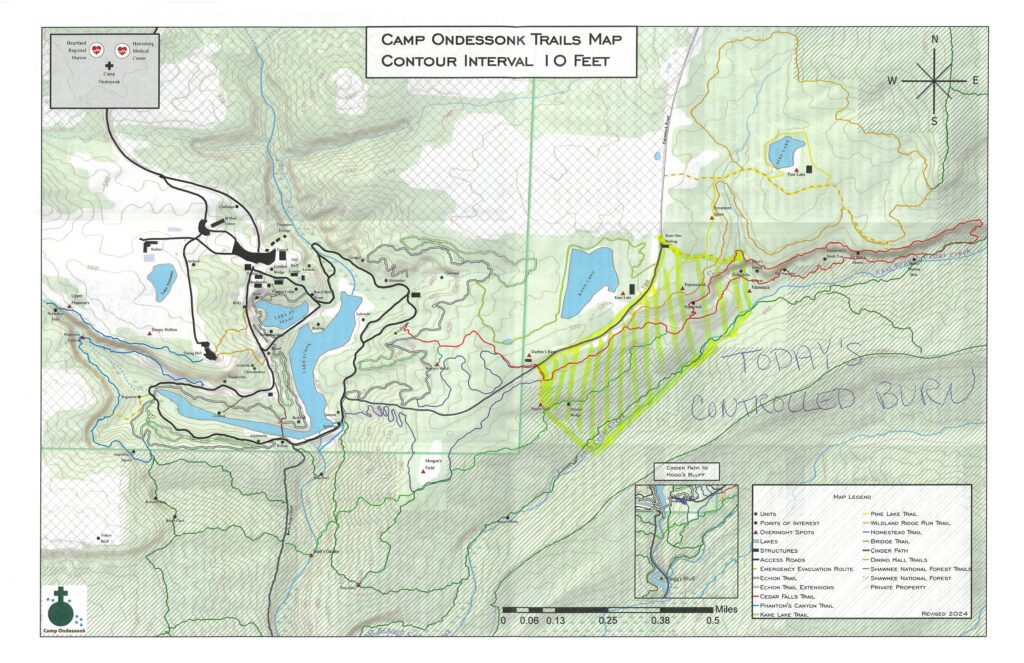
This was no accidental blaze. Camp Ondessonk, in partnership with the Illinois Department of Natural Resources (IDNR) and the Southern Illinois Prescribed Burn Association (SIPBA), executed a planned, professionally staffed prescribed burn on the east side of Camp, targeting the glade corridor between Durbin’s Barn and Kane Lake.
In Illinois, prescribed burning is recognized by law as a beneficial conservation practice, vital to public safety, environmental health, and the state’s long-term economic wellbeing. The operation required a formal “go” decision from the IDNR District Forester before a single spark was struck. Staff and volunteers assembled at Kane Gate at 11:00 a.m., with the burn planned for completion by evening.


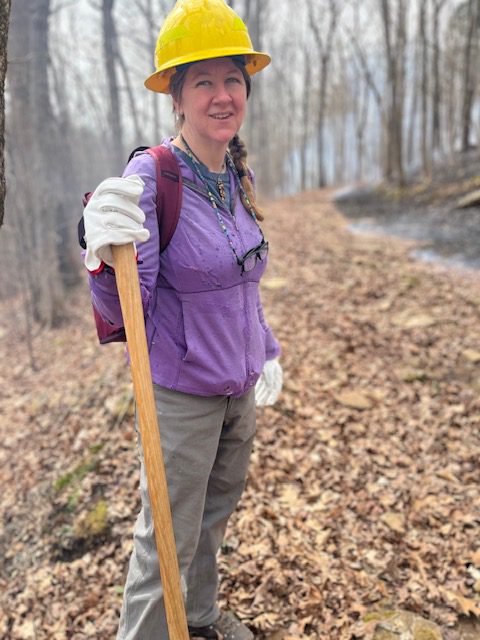
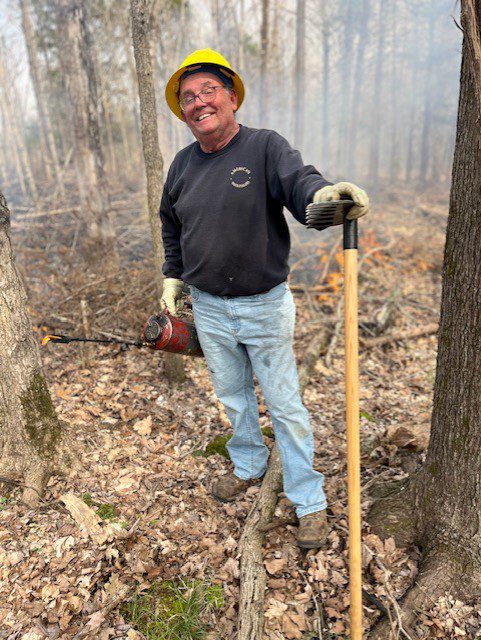
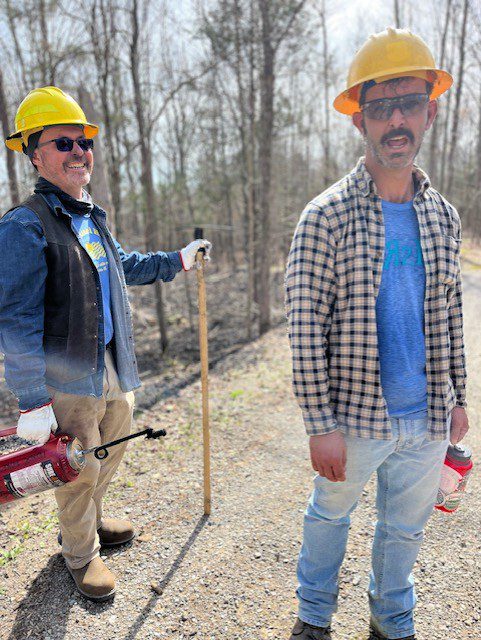
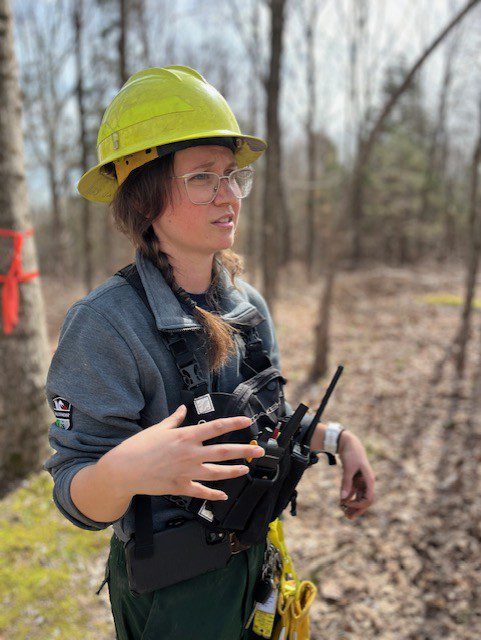
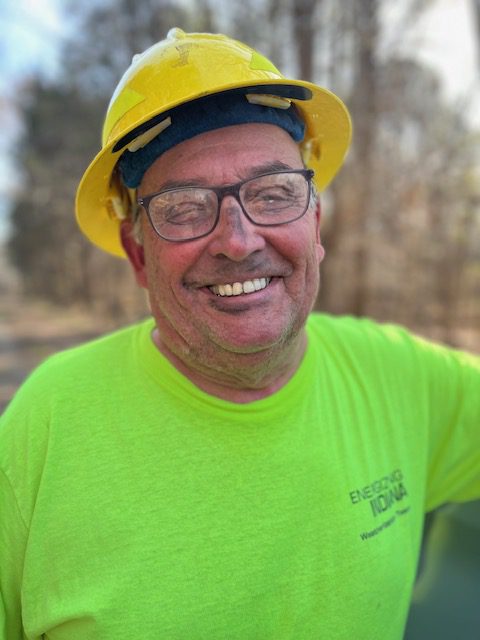
Three volunteers deserve special recognition: Curt Fest, Chris Midden, and Greg Santen stepped up for burn line management, embodying the community-driven spirit that defines prescribed fire culture across Illinois.
A Landscape That Needed Fire
To understand why this burn mattered, you have to know the land it touched.
Durbin’s Barn, Kane Lake, and the Pakentuck Road corridor mark the threshold between Camp Ondessonk’s managed spaces and the broader wild fabric of Southern Illinois, including the neighboring Shawnee National Forest. This region sits within the ecologically rich Shawnee Hills, where fire-dependent natural communities including glades, barrens, and upland forests are central to statewide conservation planning.
The burn unit itself was bounded by Pakentuck Road, East Branch Cedar Creek, and trail corridors running from Kane Gate toward Vega’s Vista. These are not arbitrary lines. Roads, waterways, and established trails function as firebreaks in prescribed burn planning, providing reliable control margins for crews on the ground.
Why Glades Benefit from Fire
Glades are among the rarest and most misunderstood habitats in the Midwest. Rocky, sun-drenched, and thin-soiled, they support specialized native plant communities precisely because heavy shade cannot take hold when natural disturbance is present. When fire disappears from these systems, woody species move in fast. Eastern Redcedar can colonize a glade within a generation, blocking sunlight and starving out the native ground layer.
That story has been unfolding on Camp Ondessonk’s east side for years. In 2025, a service-learning crew tackled hands-on glade restoration between Durbin’s Barn and Kane Lake, clearing invasive woody species to restore sunlight to the forest floor. That physical clearing was the necessary precondition for prescribed fire to follow. On March 13th, the cleansing fire followed.
The ecological case is well established. Prescribed fire supports oak regeneration, stimulates native ground-layer plants, controls invasive species, and maintains the open woodland structure that defines Southern Illinois’s ecological identity. The Illinois Wildlife Action Plan explicitly cites prescribed fire as essential for sustaining savannas, barrens, and open woodlands where decades of fire exclusion have allowed succession to accelerate. The Nature Conservancy reinforces the same principle at a national scale: in fire-adapted Midwestern systems, restoring prescribed fire is foundational to recovering ecological processes that have been interrupted for generations.
The March 13th burn was the next step in giving Durbin’s Glade a genuine fighting chance, setting back invasives, activating the native seedbank, and nudging the landscape toward a more resilient, biodiverse condition.
The Discipline Behind the Flame
Prescribed fire works because it is relentlessly methodical.
Illinois frames prescribed burning inside a legal structure that mandates specific procedures, including preparation of a written burn prescription and defined safeguards before ignition. In practice, burn plans document unit boundaries, firebreaks, ignition patterns, crew assignments, and acceptable weather parameters for every operation.
Weather, not the calendar, sets the schedule. Illinois prescribed burn programs emphasize that burns happen within seasonal windows and depend entirely on conditions coming together in the right combination. When the right day arrives, notice can be short. Staff were told in advance to expect only a few days between notification and a final go/no-go call. March 13 delivered exactly the right conditions.
SIPBA’s partnership was central to this success. As a Southern Illinois organization built around shared capacity, training, and equipment, SIPBA brings both cultural roots and practical expertise to a region where prescribed fire is both ecologically urgent and deeply valued.
What You May Have Seen Near Pakentuck Road
If you were in the area on March 13, the signs were unmistakable. Smoke on the horizon, crews moving steadily along trails and forest edges, the faint smell of burning grass and leaves.
Agencies that communicate publicly about prescribed fire regularly remind communities that smoke and blackened ground are short-term effects, and that ecological recovery begins quickly in the following growing season. The boundaries you saw were not improvised; they were planned months in advance, consistent with how prescribed burn programs design firebreaks and containment features.
If seeing open fire or smoldering logs laying in the forest surprised you, that reaction is understandable. But destruction is not the goal. Renewal is. The entire purpose of prescribed fire is to apply flame deliberately, under specified conditions, to accomplish defined land management objectives while minimizing risk.
What Comes Next for the Glade
A successful prescribed burn does not close a chapter. It opens one.
For glades and open woodlands, land managers pair fire with follow-up monitoring and, where necessary, continued invasive control. Ecological restoration is a process built across seasons and years, not completed in a single afternoon.
At Camp Ondessonk, this burn fits within a multi-year stewardship strategy that links prescribed fire, invasive species management, and glade restoration as components of a unified ecosystem approach rather than isolated projects. The long-term payoff extends well beyond conservation metrics. Healthier native ground layers, stronger oak regeneration, and more resilient habitat mosaics are the foundation of the trails, vistas, and outdoor education experiences that make Southern Illinois camps exceptional in the first place.
For the campers who will hike to Kane Lake this summer, the evidence of this prescribed fire will be mostly invisible. But its positive influence on the landscape will be everywhere.
References
Shawnee National Forest. U.S. Forest Service. https://www.fs.usda.gov/r09/shawnee
Illinois General Assembly. 525 ILCS 37/5 – Prescribed Burning Act. https://www.ilga.gov/legislation/ilcs/documents/052500370K5.htm
IndyStar / USA Today. IDNR Camp Ondessonk RX – Wildfire and Smoke Map. https://data.indystar.com/fires/idnr-camp-ondessonk-rx/cfad1d61-a32f-4eb7-b106-bfe98d3ce529/
Southern Illinois Prescribed Burn Association (SIPBA). https://www.sipba.org/
Illinois Department of Natural Resources. Eastern Shawnee – Illinois Wildlife Action Plan. https://dnr.illinois.gov/conservation/iwap/easternshawnee.html
Illinois Department of Natural Resources. Forest and Woodland – Illinois Wildlife Action Plan. https://dnr.illinois.gov/conservation/iwap/forestandwoodland.html
The Nature Conservancy. Controlled Burns, Wild Benefits. https://www.nature.org/en-us/about-us/where-we-work/priority-landscapes/midwest/stories-in-the-midwest/midwest-fire/