
The Primitive Units – The Forebearer of Camper vs Wild

by Pati Egan
Camper vs Wild is one of the adventure programs occasionally offered during Summer Camp. The 2025 Camp brochure states: Participants will develop real-life leadership skills through participation in primitive camping activities. Skill development includes basic backpacking, outdoor cooking, map and compass navigation, fire building, and water purification. I wonder how many campers and staff know that almost the same description could have been used in 1969 to describe the Primitive Units of Teondechoren and Couture?
“I’m thankful for the two years I was able to be in Teondechoren Primitive – it changed my life, and as I look back, it was equal in many ways to Outward Bound and NOLS (National Outdoor Leadership School), but for grade-school-aged children,” stated Norb Garvey, former Primitive camper, staff member, and volunteer at Camp Ondessonk.
The Primitive units of Teondechoren and Couture opened in 1969 and closed in 1972. Though its lifespan was short, the impact it had on the campers and staff was long-lived and significant.
My knowledge of this program was rather limited, so in order to get a good feel for this program I called on many former Primitive campers and staff: Lucia (Juenger) Hodges, Steve Rheinecker, Jim Klein, Dan Hechenberger, Norb Garvey, and Janet Harper. Their enthusiasm in reliving their memories of living in these units led me to think that this will make an awesome story.
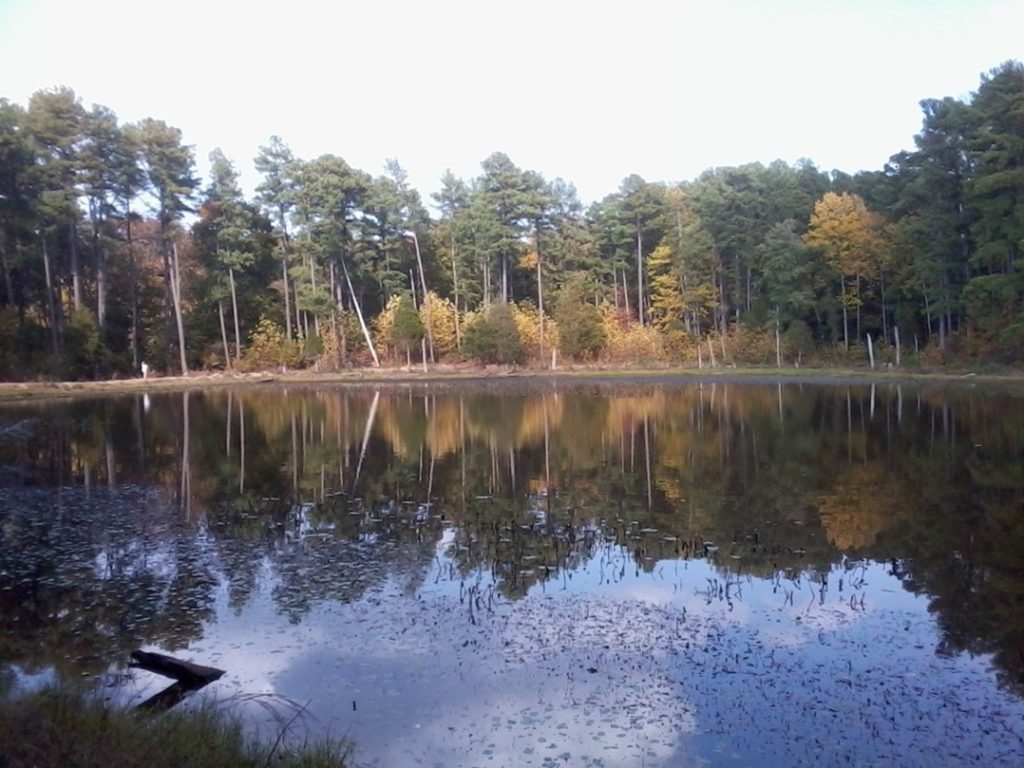
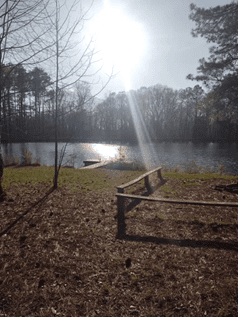
Let’s start with what Camper vs Wild has in common with The Primitives. Pine Lake is/was the base camp for both Camper vs Wild and The Primitives. Teondechoren was located on the opposite side of the lake if you are looking at the lake from the dock. Camper vs Wild uses the more developed side of the lake.

Shelter Building and Camp Living
Both Camper vs Wild and Primitives stressed proper shelter building and responsible outdoor living – now called Leave No Trace.
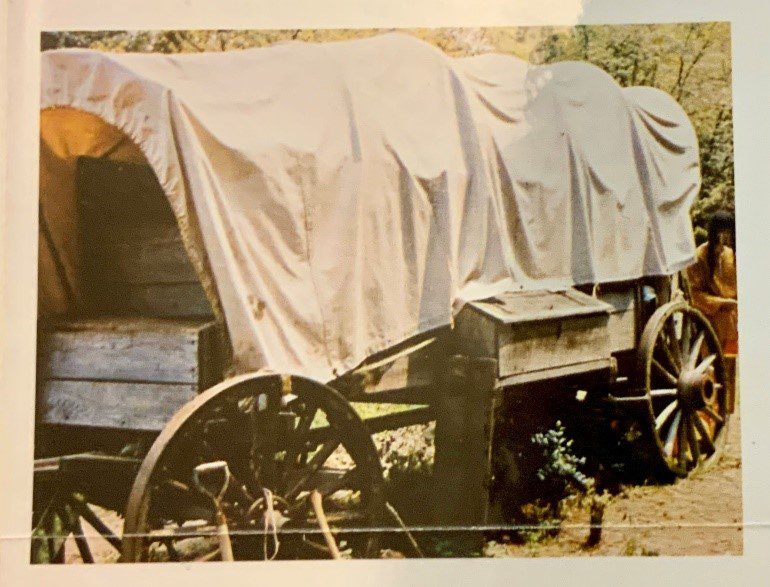
Teondechoren had a base shelter that was an old covered wagon. There was enough room for the staff to sleep in and to keep supplies. Jim Klein remembers getting the wagon to Teondechoren on a flat-bed truck. Jim rode on the wagon! Janet Harper recalls that the covered wagon was hot and stuffy. The staff eventually just used the wagon to store supplies.
Jim Klein’s Amazing Treehouse
When Jim Klein was the Unit Leader of Teondecorum, the campers and staff built an elaborate treehouse complex for their shelter. The tree houses were built out of tree branches and twine from hay bales, and could only be reached by a rope ladder. The treehouses were well built, safe, and the campers loved them!
The Camper vs Wild program offers a detailed packing list. Some of these items might not have been available in 1969, but I’m sure the original Primitive campers would have loved to have some of these items.

Camper vs Wild supplies vs Primitive Unit Supplies
The Camper vs Wild program offers a detailed packing list. Some of these items might not have been available in 1969, but I’m sure the original Primitive campers would have loved to have some of these items.

The Primitive campers probably had a canteen, a sleeping bag, and a flashlight. If they had a duffle bag it probably came from an Army Surplus store. If you asked a 1969 camper what a day pack was – you’d probably get a blank stare. The same stare for sporks, Ziploc or Gladware, mattress pads, and 1-liter water bottles. A Camper vs Wild participant would be amazed that most campers had pocket knives and that Jim Klein and many staff carried a machete!
Camp Life
Both groups did not work off of a set schedule. Primitive campers could arrange for a horseback ride or other Camp activities during their week. Both groups enjoyed exploration of both Camp sites and National Forest sites. Both programs used Pine Lake for swimming, and today’s campers can travel off of Camp property to places like the Garden of the Gods. Primitive campers would sometimes take twilight hikes to Trigg Tower.
Cooking, Sanitation, and Water Purification
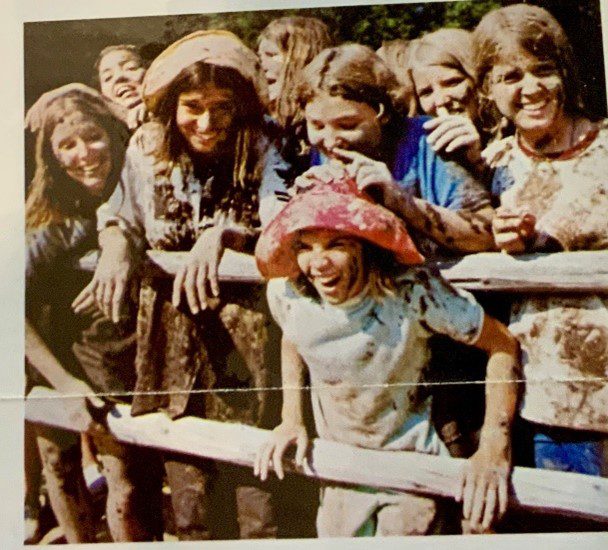
The Primitive units had chickens that were roasted on a spit. Food was delivered to the units on Sunday and Tuesday. Steve Rheinecker recalls, “Besides the well-known chicken roasts, we had fondue, pancakes made with elderberries, paella, couscous, and a variety of meals that we could craft from Camp stores.” Jim Klein recalls that the staff bought octopus for the campers to try out one time.
There was no outhouse anywhere close to Pine Lake or Pakentuck. Steve recalls that “Toilets were slit toilets, lashed limbs, over an open pit, lined and moved regularly.”
The water purification system that Primitives used would definitely not be used by today’s campers. Pine Lake is a spring-fed lake. Staff would take a large Jerry can, swim out to the middle of Pine Lake, dive down at least 10 feet, fill the can, and surface. A small amount of bleach would be added to the water. It would sit for a while and then be used for drinking or cooking.
The water purification system that Primitives used would definitely not be used by today’s campers.
Pine Lake is a spring-fed lake. Staff would take a large Jerry can, swim out to the middle of Pine Lake, dive down at least 10 feet, fill the can, and surface. A small amount of bleach would be added to the water. It would sit for a while and then used for drinking or cooking.

Jerry Can – side note, campers would also carry this full of Camp water on their all-day exploration. Two campers would put a stick between the handle and carry it.
Camper vs Wild Skills

Camper vs Wild learn skills such as navigation using a map and compass, starting a fire without using matches, orienteering, and Leave No Trace camping skills. Suzy (Munn) Mahoney recalls that her son’s group found their way from Pine Lake back to Camp using only a map and compass.

The important things both programs have in common is life-long friendships, leadership development, and an appreciation of God’s creation. No one was quite sure why the Primitives had such a short life span. It was suggested that environmental concerns (the first Earth Day was held in 1970) was a big factor in this decision.
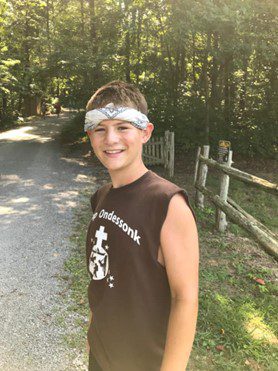
Peyton Mahoney-Camper vs. Wild
During the celebration of Camp O Day, let’s all commemorate both our past with the present, as they are both intertwined to bring out the best in the youth of today.
Special thanks to Suzy Munn Mahoney for her assistance with Camper vs Wild.